 how-to
Protecting Delicate Furniture During Moves
Table of Contents
- Why Protecting Delicate Furniture Matters Before You Move
- Best Packing Materials for Furniture Protection
- How to Wrap Antique Furniture for Moving
- Step-by-Step Protection Process for Delicate Furniture
- Hiring Professional Movers for Delicate Items
- Insurance and Damage Assessment
- Eco-Friendly Packing Alternatives
- Frequently Asked Questions
Last Updated: September 30, 2026
Why Protecting Delicate Furniture Matters Before You Move
Moving delicate furniture is stressful, but damage is preventable. Protecting delicate furniture during moves requires the right materials, proper technique, and careful handling from start to finish.
This guide covers which materials work best, how to wrap different types of pieces, and when to hire professional movers for high-value items.
Best Packing Materials for Furniture Protection
The right materials make all the difference when protecting delicate furniture. Each material serves a specific purpose, and using the wrong one, or skipping it entirely, leaves your pieces vulnerable to damage. Specialized care becomes even more critical when protecting inlay furniture from the warping effects of environmental moisture.
Bubble Wrap and Cushioning Layers
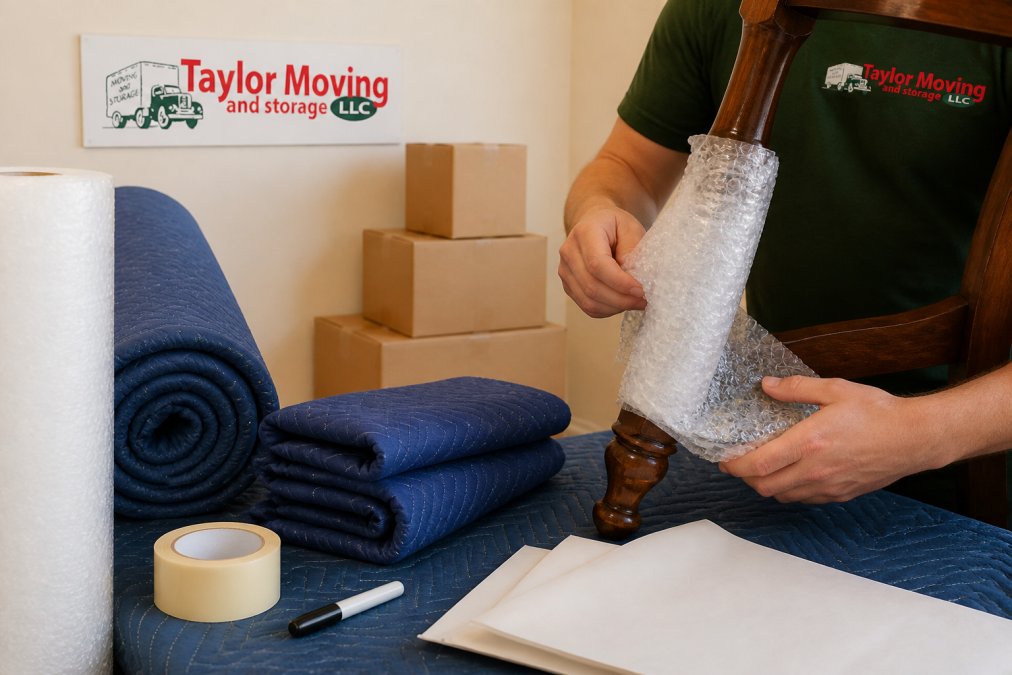
Bubble wrap absorbs shock and prevents items from touching hard surfaces. Use at least two layers for glass tabletops, mirrors, delicate wood, and carved details. Secure with tape, but avoid placing it directly on finished wood or veneers, as it can pull off the finish when removed.
Foam padding works well for items bubble wrap might puncture and protects backs of pieces resting against truck walls.
Moving Blankets and Felt Pads
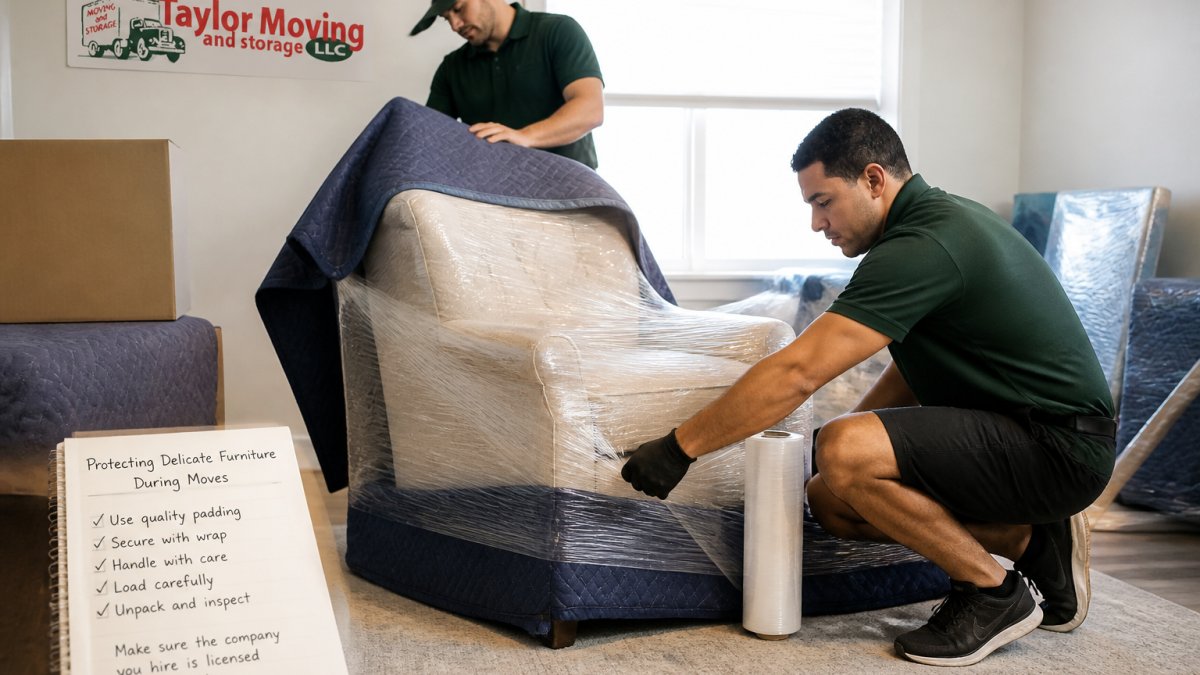
Moving blankets absorb impact, prevent scratches, and protect against dust and moisture. Wrap them around furniture and secure with stretch film. Felt pads under furniture legs prevent scratches on floors and allow smooth sliding. Place felt pads on all four legs of chairs, tables, and dressers.
Shrink Wrap and Stretch Film
Stretch film holds protective layers in place and protects against moisture and dust. Wrap it around bubble wrap or moving blankets to keep everything secure and prevent padding from shifting. For pieces with drawers or doors, wrap the entire unit to prevent components from opening during the move.
Corner Protectors and Edge Guards
Corners and edges take the most damage during moves. Use corner protectors on table, desk, cabinet, and dresser corners, and edge guards on the sides of wooden pieces. Apply them before wrapping the entire piece to create multiple layers of protection at vulnerable points.
How to Wrap Antique Furniture for Moving
Antique furniture requires extra care because damage can't always be repaired without affecting value. The wrapping process is slightly different for pieces with special finishes or materials.
Protecting Specialized Materials
Different materials need different approaches.
Marble and stone surfaces: Wrap in kraft paper first, then bubble wrap. The paper allows the stone to breathe while preventing moisture damage.
Velvet and upholstered pieces: Use moving blankets instead of plastic wrap to avoid crushing the nap. Wrap loosely to prevent compression.
Antique wood with veneer: Wrap in kraft paper first to regulate moisture, then add bubble wrap for cushioning.
Glass and mirrors: Use double-layer bubble wrap. For large pieces, create an X pattern with kraft paper tape on the back to prevent shattering.
Disassembly and Hardware Protection
Disassemble what you safely can: remove legs from tables and dressers, doors from cabinets, shelves from bookcases, and drawers from dressers. Keep hardware in labeled plastic bags taped to the corresponding piece. Photograph hardware before disassembly so you know how it reassembles.
Step-by-Step Protection Process for Delicate Furniture
Follow this process for each piece of delicate furniture you're moving.
Step 1: Clean and inspect. Wipe each piece with a soft cloth and document existing damage with photos. Step 2: Disassemble as needed. Remove legs, drawers, doors, and shelves. Bag and label hardware. Step 3: Protect corners and edges. Apply corner protectors and edge guards. Step 4: Wrap in bubble wrap. Use at least two layers, securing with tape away from finished surfaces. Step 5: Add a blanket layer. Wrap moving blankets around the bubble-wrapped piece. Step 6: Secure with stretch film. Wrap the entire package to hold everything in place. Step 7: Label clearly. Mark each piece with its destination room and note if fragile.
Surface Protection and Cleaning
Before wrapping anything, clean it thoroughly. Dust particles trapped between layers can scratch surfaces during transport.
Use a soft, lint-free cloth for dusting. For wood furniture, use a furniture polish appropriate for the finish. For glass, use glass cleaner. For upholstered pieces, use a soft brush to remove dust.
Check for existing damage before wrapping. Take photos of any scratches, dents, or stains. This protects you if damage occurs during the move and helps movers understand which pieces need extra care.
Loading and Securing in Transport
How furniture is loaded into the truck matters as much as how it's wrapped. Improper loading can shift items during transport, causing damage despite good wrapping.
Load heavy pieces first. Create a stable base with dressers, tables, and other solid pieces. Never stack lighter pieces on top of heavier ones.
Use furniture pads between stacked items. Even with padding, don't stack more than two pieces high.
Secure everything with moving straps or rope. Tie pieces to the truck's tie-down points so they can't shift during turns or sudden stops.
Leave space between pieces so they don't rub against each other. Even wrapped furniture can get scuffed if pieces are touching during transport.
Climate Control During Transit
Temperature and humidity changes can damage furniture. Wood expands and contracts with humidity. Leather can crack. Upholstery can develop mildew.
For moves during extreme weather, consider climate-controlled transportation.
Climate-controlled vehicles maintain stable temperature and humidity levels. This is especially important for antique furniture, leather pieces, and anything with a valuable finish.
If climate control isn't available, avoid leaving furniture in a hot truck or a cold garage overnight. Try to complete the move in one day when possible.
Hiring Professional Movers for Delicate Items
Some furniture pieces are too valuable or too fragile to move yourself. Professional movers have the experience, equipment, and insurance to handle high-value items safely.
When you hire professional movers for delicate items, make sure the company you hire is licensed and insured. Ask about their experience with similar pieces and what protection methods they use. Get a Free Estimate that explains what protection will be provided. Professional movers can often complete the job faster than you can do it yourself, reducing exposure to risk.
Insurance and Damage Assessment
Even with perfect protection, accidents happen during moves. Understanding your coverage options and inspection procedures protects your investment and ensures you can recover losses if damage occurs.
Understanding Moving Company Liability and Coverage Options
Moving companies are required by federal law to offer liability coverage, but the default option provides minimal protection. The Federal Motor Carrier Safety Administration (FMCSA) sets minimum standards, but coverage limits are often inadequate for valuable furniture.
Released Value Coverage is the baseline option, limiting liability to 60 cents per pound per item, rarely sufficient for delicate or antique furniture. Full Value Coverage means the moving company is liable for the full replacement cost of damaged items, providing genuine protection for high-value pieces.
Third-Party Insurance is an alternative to moving company coverage.
Pre-Move Documentation: Creating Your Baseline
Documentation is your strongest defense in a damage claim. Without clear proof of the item's condition before the move, disputes over responsibility become difficult to resolve.
Post-Move Inspection and Damage Reporting
How and when you inspect furniture after delivery directly affects your ability to recover losses.
What Happens If Damage Occurs
If you file a damage claim, the moving company will investigate. They may request additional photos, receipts, or appraisals to verify the item's value. For items with significant value, they may hire an independent appraiser to assess damage and repair costs.
Eco-Friendly Packing Alternatives
Protecting furniture doesn't require single-use plastics. Eco-friendly alternatives work well for many situations.
Frequently Asked Questions
What is the best way to protect furniture during a move?
Protecting delicate furniture during moves starts with using quality materials: bubble wrap for shock absorption, moving blankets for surface protection, and corner protectors for edges. Clean the furniture first, disassemble removable parts, wrap each section individually with multiple protective layers, and secure everything with stretch film. Load furniture vertically when possible to reduce pressure on legs and joints. When hiring professional movers, ensure they are licensed and insured, and ask how they handle high-value items specifically.
What materials should I use to wrap delicate furniture?
The best packing materials for furniture include heavy-duty moving blankets, bubble wrap for fragile components, shrink wrap for moisture barriers, felt pads under legs, and corner protectors for exposed edges. For specialized materials like marble or antique wood, add extra padding layers. Use rip-resistant stretch film to hold wrapping in place and prevent shifting during transport. Avoid direct contact between furniture and hard surfaces by creating cushioning barriers with padding throughout.
How do professional movers wrap furniture?
Professional movers use a systematic approach: they start with surface protection and cleaning, apply bubble wrap to fragile areas, wrap the entire piece in heavy-duty moving blankets, secure with stretch film, and add corner protectors. They disassemble hardware when appropriate and label all parts. They use felt pads under legs to prevent scratches and employ crating for extremely valuable items. When hiring professional movers for delicate items, confirm they have experience with your specific furniture type and ask about their damage assessment process after delivery.
Should I remove hardware from furniture before moving?
Yes, removing removable hardware reduces damage risk and makes wrapping easier. Disassemble legs, drawers, shelves, and detachable components. Store hardware in labeled bags taped to the corresponding furniture piece or kept in a clearly marked container. Take photos of the original configuration for reassembly reference. For antique furniture, be cautious with hardware that may be glued or nailed; consult a specialist if unsure. This step is especially important when hiring professional movers for delicate items, as it reduces handling complexity.