 how-to
Hire a Professional Packing Service in 2026: How-To
Table of Contents
- Why Hiring a Professional Packing Service Pays Off in 2026
- How to Prepare for Professional Packers Before They Arrive
- Your Packing Service Checklist: What Full, Partial, and Unpacking Options Include
- Questions to Ask a Packing Company Before You Book
- How to Compare Packing Service Quotes Without Getting Burned
- Packing Fragile Items for a Move: What to Leave to the Pros
- Conclusion: Booking Your Packing Service with Confidence
- Frequently Asked Questions
Last Updated: October 5, 2026
Why Hiring a Professional Packing Service Pays Off in 2026
Hiring a professional packing service means paying a trained crew to box, wrap, and label your household goods so they arrive intact. At Taylor Moving LLC, smooth moves are planned, not rushed.
The payoff is not just speed.
Here is what most guides skip: the value of a packing service is not that someone else does the work, but that the work is done in an order that protects your belongings and your move date.
How to Prepare for Professional Packers Before They Arrive
Preparation separates a one-day pack from a two-day scramble. These steps take an afternoon and save far more once the crew arrives.

Declutter first. Every item you donate or toss is one nobody has to pack, load, or unpack.
Clear pathways and surfaces. Packers need room to work.
Point out fragile and high-value items. Walk the lead through the house and flag antiques, artwork, mirrors, and electronics.
A common mistake is waiting until the morning of to decide what stays and what goes.
Your Packing Service Checklist: What Full, Partial, and Unpacking Options Include
Packing services come in three tiers, and the right one depends on how much time and control you want to keep. Full-service packing covers everything from wrapping to labeling. Partial packing lets you handle some rooms yourself. Unpacking services reverse the process at the destination.
Full-Service Packing and Partial Packing Explained
Full-service packing means the crew packs your entire home, including fragile items, and typically includes materials, wrapping, and labeling. You do nothing but point and confirm.
Partial packing is a middle path: you pack low-risk items like books and clothing, and the pros handle the kitchen, electronics, artwork, and anything fragile. It is the most common choice for households that want to save money without risking the items that matter most.
| Option | What's Included | Best For | Your Effort |
|---|---|---|---|
| Full packing | All rooms, materials, wrapping, labeling | Busy households, seniors, full relocations | Minimal |
| Partial packing | Fragile, kitchen, electronics, artwork only | Budget-conscious movers who can pack basics | Moderate |
| Unpacking | Box placement, unwrapping, debris removal | Anyone who wants a fast settle-in | Minimal |
Packing Supplies, Materials, and Unpacking Services
Materials are not a detail. A packing service checklist should confirm who supplies boxes, tape, gloves, protective wrapping, and specialty cartons for mirrors, lamps, and mattresses.
Ask whether materials are included in the quote or billed separately. This is one of the most common sources of a surprise line item on the final invoice.
Questions to Ask a Packing Company Before You Book
The right questions protect your belongings and your budget. Ask them before you sign, not after the truck is loaded.
What is excluded from packing? Hazardous materials, perishables, and certain valuables are typically excluded. Get the list in writing.
How is the crew assigned? Ask whether the same crew packs and loads, since continuity reduces miscommunication.
What happens if something breaks? Ask about valuation coverage and the claims process before you book, not after.
How to Vet Packers and Verify Credentials
Verifying a packing company takes about ten minutes and prevents most bad outcomes. Check the license and insurance first, then look for reviews across more than one platform. Ask for references from recent local moves, and read the estimate's fine print so you understand what triggers additional charges. A company that hesitates to provide credentials is telling you something. Securing a reliable team for your belongings is only the first step in a smooth transition, as you must also address the property requirements outlined in a move out cleaning checklist.
How to Compare Packing Service Quotes Without Getting Burned
Comparing quotes is where most people lose money, because they compare the bottom line instead of the scope. Two quotes for the same home can differ substantially simply because one bundles materials and the other bills them separately. Normalize every quote to the same unit of work before you compare.
Understand the Three Pricing Structures
Most packing companies quote in one of three ways, and each behaves differently when the job runs long or short:
- Hourly rate plus materials. You pay for crew time (often billed per packer, per hour) plus boxes, tape, and wrapping. This is the most transparent structure for partial packing because you control scope, but a slow crew costs you more, so ask for a realistic hour estimate in writing.
- Flat rate or binding estimate. The company quotes one number for a defined scope. This protects you if the job runs long, but only if the scope is described precisely. A flat rate built on a vague inventory is not a real flat rate.
- Per-room or per-item pricing. Common for partial packing, where you pay a set amount for the kitchen, artwork, or electronics. Easy to compare, but confirm what counts as a "room" and whether materials are included.
The Line Items That Decide the Final Bill
Ask every company to break the quote into the same categories so you can compare like for like:
- Is the estimate binding or non-binding, and is it in writing?
- Is the hourly rate per packer or per crew, and does it include travel time?
- Is there a minimum number of hours or a minimum crew size?
- Are materials included, capped, or billed at retail?
- Are there stair, elevator, or long-carry charges at either end?
- Is there a fuel or trip charge?
- What is the valuation coverage limit, and is there a deductible or a separate charge for it?
- What triggers additional charges, overtime, weekend, or same-day scheduling?
A common pattern is that the lowest headline number is the one with the most exclusions. When you line up the categories above, the cheapest quote often stops being the cheapest.
How to Build a Like-for-Like Comparison
Write the scope down once, number of rooms, fragile and high-value items, access details such as stairs and parking distance, and target dates, then send that identical scope to every company. Ask each to confirm in writing which line items are included and which are extra.
For a customized packing plan, the quote should reflect your actual inventory, not a generic formula. If a company quotes without asking about access, equipment, or room count, treat that number as a guess.
Confirm Licensing and Insurance Before You Compare Price
Price is meaningless if the company is not credentialed. Before you weigh quotes, confirm the company is licensed and insured, ask for the license number and a certificate of insurance, and verify that coverage applies to packing, not just transport. A quote from an uninsured crew is not a lower price; it is an uninsured risk.
Packing Fragile Items for a Move: What to Leave to the Pros
Packing fragile items for a move is where professional crews earn their fee. Glass, mirrors, artwork, electronics, and antiques fail in ways that are easy to prevent and expensive to fix. The difference between a pro and a well-meaning helper is not effort, it is knowing which material and method each item requires.
How Pros Pack the Items That Break Most
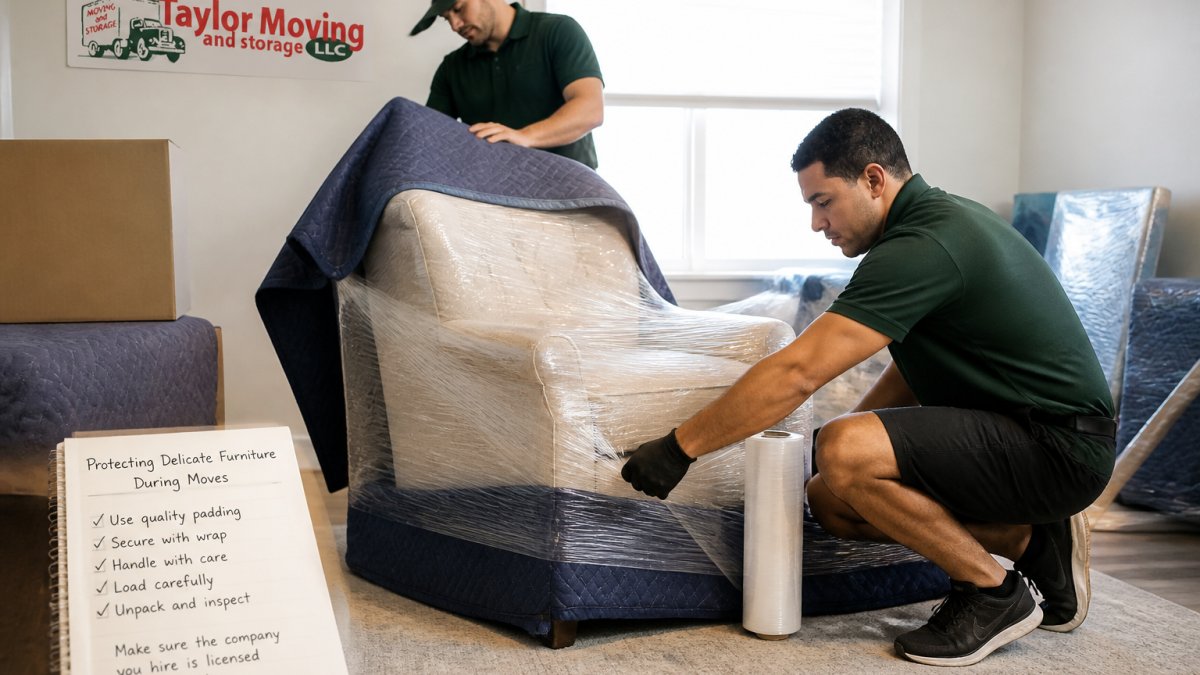
- Mirrors, framed art, and glass tabletops. Glass fails from flex and from edge impact. Pros tape an X across the glass to hold it together if it shatters, wrap the frame corners, then build a custom carton or use a mirror box so nothing presses on the surface. Framed art is packed face-to-face in pairs with padding between, never flat under weight.
- Televisions and monitors. The screen is the fragile part, not the frame. Pros use the original box when available, otherwise a double-walled carton with foam corner blocks so the screen never touches the sides. Cables and stands are bagged and labeled separately so they do not scratch the panel.
- Computers and electronics. Static, heat, and impact are the three risks. Pros remove loose drives where practical, bag small components, and pad the carton so nothing shifts. Back up your data before move day regardless.
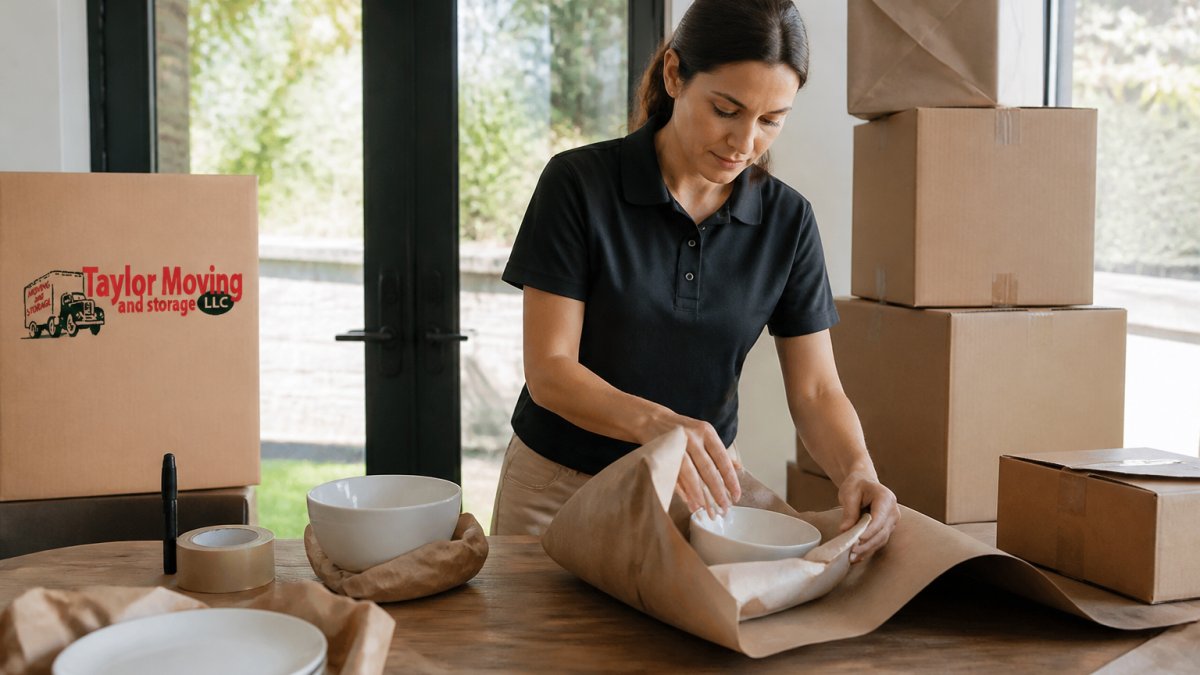
- Kitchen glassware and china. Every plate is packed on edge, never flat, with a paper or foam plate between each one. Glasses are wrapped individually and packed upright, never nested, because nesting cracks rims. Heavy items go in small cartons so the box does not crush itself.
- Lamps and shades. The base and the shade travel separately. Shades are wrapped in paper and packed in a carton by themselves, never with anything that can press against them.
- Antiques, heirlooms, and instruments. These often need custom crating or a fitted carton rather than a standard box. Loose parts, keys, and accessories are bagged and labeled to the item. Tell the crew before booking so they can bring the right materials and plan the packing order.
What Should You Pack Yourself?
Leave to the pros anything you would be upset to replace: mirrors, framed art, glass tabletops, televisions, monitors, computer equipment, antiques, heirlooms, high-value furniture, kitchen glassware, china, and lamps. If you do pack some yourself, use the same materials and methods above, and note that many valuation coverage terms treat owner-packed boxes differently from crew-packed ones, so ask before you decide.
Items That Are Usually Excluded
Most companies will not pack hazardous materials such as paint, propane, ammunition, and other flammables, and many exclude perishables and certain high-value valuables like jewelry, cash, and important documents. Get the exclusion list in writing before move day so nothing is left behind at the last minute.
If you have specialty or high-value items, tell the crew before booking so they can bring the right materials and plan the packing order, and confirm the company is licensed and insured, with coverage that applies to packing, not just transport.
Conclusion: Booking Your Packing Service with Confidence
The hardest part of a move is not the lifting. It is trusting that your belongings will arrive the way they left. A licensed, insured packing team removes that worry, and the preparation you do beforehand makes their work faster and your move cheaper.
At Taylor Moving LLC, we have served Boulder and Longmont since 1997 with transparent, inclusive hourly pricing and no hidden fees. If you want a packing plan built around your actual belongings, get a free moving estimate and we will walk you through every step before move day.
Frequently Asked Questions
What should I ask before hiring a professional packing service?
Ask whether the company is licensed and insured, whether the crew is trained for fragile items, and what the quote includes. Request a written estimate and clarify how payment works. Confirm how they handle scheduling changes and what happens if an item breaks. A transparent packer will answer these without hesitation and provide references from recent customers.
Can professional packers handle fragile items?
Yes, experienced packers use protective wrapping, specialized boxes, and careful labeling for fragile items like glassware, electronics, and antiques. When packing fragile items for a move, ask the crew about their process for high-value pieces and confirm whether valuation coverage applies. Discuss any heirlooms before packing day so the team can plan the right materials.
How do I know if a packing company is licensed and insured?
Ask for their license number and insurance certificate, then verify both directly with the issuing authority. A legitimate company will provide documentation without delay. Liability coverage matters because it determines what happens if something breaks. Always confirm coverage limits in writing before booking.
What should I do before professional packers arrive?
Sort items you plan to donate or discard, set aside valuables you want to transport yourself, and clear pathways for the crew. Label rooms clearly and note any items that should not be packed. Confirm the arrival window and parking access. A little preparation speeds up the job and keeps your packing service checklist on track.