 how-to
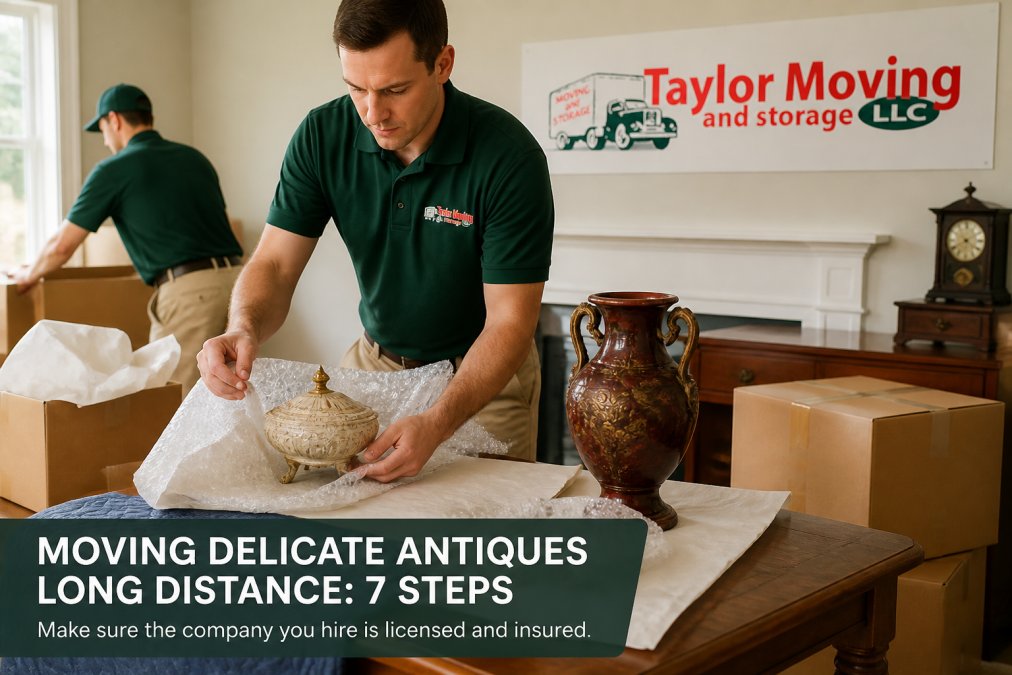
Moving Delicate Antiques Long Distance: 7 Steps
Table of Contents
- What You'll Need Before Moving Delicate Antiques
- Step 1: How to Prepare Antiques for Professional Movers
- Step 2: Custom Crating for Antiques That Cannot Be Boxed
- Step 3: Moving Insurance for High-Value Items
- Step 4: Loading, Climate Control, and Secure Transport
- Step 5: Hiring Licensed and Insured Antique Movers
- Step 6: Post-Move Inspection Checklist
- Common Mistakes When Moving Delicate Antiques Long Distance
- Frequently Asked Questions
Last Updated: September 23, 2026
What You'll Need Before Moving Delicate Antiques
Moving delicate antiques long distance starts with a simple truth: the packing is the move. Get that right and the rest is logistics.
Before you book anything, gather these supplies:
- Custom crating materials
- Acid-free paper and tissue
- Bubble wrap and shock-absorbent padding
- Moving blankets and protective padding
- Sturdy tape, stretch wrap, and labeled boxes
- A camera or phone for documentation
- A written inventory list with photos
Step 1: How to Prepare Antiques for Professional Movers
Preparation is where you protect your own claim. Do it before the crew arrives, not while they're carrying boxes.
Photograph and document every piece
Take wide shots and close-ups of each item from multiple angles. Capture existing scratches, chips, and cracks.
Stabilize loose parts and hardware
Antique furniture rarely travels as one solid unit. Tighten what moves and remove what can break.
- Take off legs, finials, knobs, and mirrors when they unscrew
- Bag hardware and tape it to the piece, never loose in a box
- Pad drawers so they can't slide out
- Wrap metal fittings in acid-free paper to slow tarnish
- Support weak joints with foam before wrapping
Step 2: Custom Crating for Antiques That Cannot Be Boxed
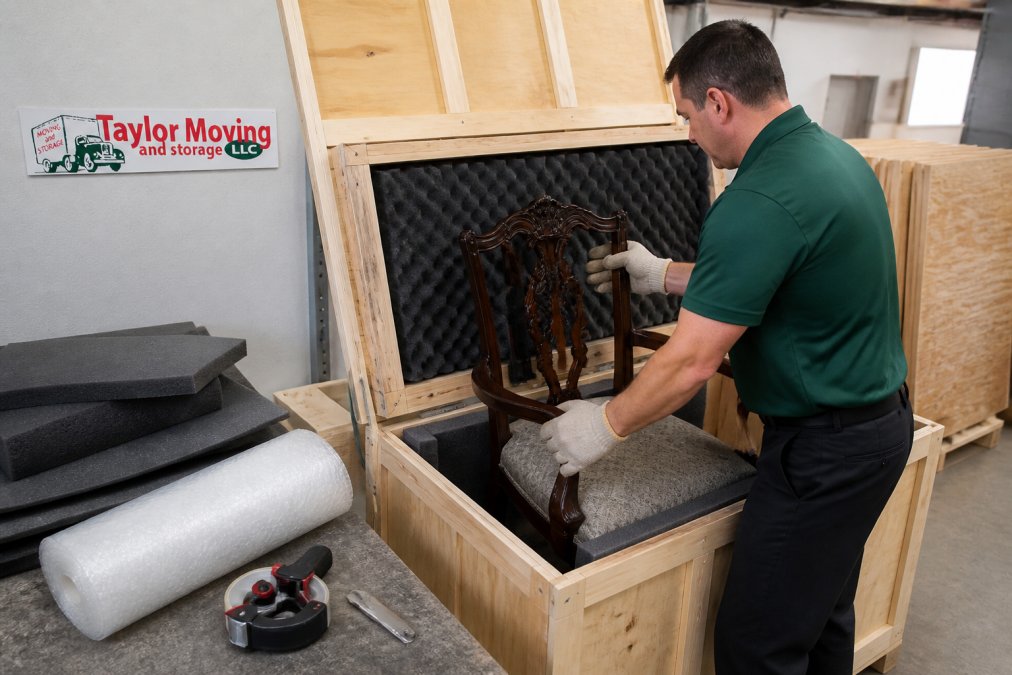
- Measure the item and its most fragile points
- Build a plywood shell with corner braces
- Line it with foam or shock-absorbent padding
- Brace the item so it can't shift inside
- Seal it and label it clearly
Step 3: Moving Insurance for High-Value Items
Moving insurance for high-value items is not the same as basic carrier liability. Know the difference before you sign, because the gap between them is where most antique owners get hurt.
| Coverage Type | How It Pays | Best For |
|---|---|---|
| Released value | By weight, per pound | Low-value items |
| Full value protection | Declared value | Antiques, fine art |
| Third-party transit insurance | Appraised value | High-value heirlooms |
How valuation is actually calculated
Valuation is not a guess. It is a number you and the mover agree on in writing before the truck is loaded, and it is tied to one of three benchmarks:
- Fair market value, what the piece would sell for today between a willing buyer and seller. This is the standard for most antique furniture.
- Replacement cost, what it would cost to buy a comparable piece in similar condition. Usually higher, and usually what you want for one-of-a-kind items.
- Appraised value, a written opinion from a qualified appraiser, which carriers prefer for anything unusual or high-value.
Ask which benchmark the mover uses.
Document the inventory before the move
This is the step most guides skip, and it is the one that decides whether a claim gets paid.
- A description, maker, period, materials, dimensions, distinguishing marks
- Photographs, wide shots plus close-ups of every existing flaw
- The declared value and the benchmark behind it
- Provenance, receipts, appraisals, auction records, or family documentation
What a claim actually requires
A claim is a paperwork exercise, and the burden is on you. Most carriers expect:
- The signed bill of lading with the damage noted at delivery
- The pre-move condition report and photographs for the damaged item
- The declared value and supporting appraisal or provenance
- A repair estimate or a written replacement quote
Step 4: Loading, Climate Control, and Secure Transport
Climate-controlled transport matters more than most people realize. Wood, canvas, and textiles react to heat and humidity, and the reaction is slow enough that damage often appears after delivery.
- Heat dries and shrinks wood, which opens old joints and lifts veneer at the edges.
- Humidity swings swell wood, soften hide glue, and feed mold in textiles and paper.
- Freezing embrittles lacquer, shellac, and some adhesives, so a piece that is handled roughly while cold cracks instead of flexing.
Questions to ask before booking
- Is the truck climate-controlled, and what range does it hold?
- Will my items be on one truck or transferred between trucks?
- How is freight shipping handled for cross-country moves?
- What's the estimated transit time, and what happens if it slips?
- How are crates braced and tracked inside the trailer?
Fewer transfers means less handling. Less handling means less risk. Every transfer is a second loading, a second set of hands, and a second chance for a crate to be set down hard or stacked wrong. If a long-distance relocation involves multiple trucks, ask how items are tracked between them and who is responsible while a crate sits in a warehouse.
How a trailer should be loaded
Secure transport is a loading-order problem before it is a driving problem.
- Heavy items go low and forward, over the axles.
- Crates are braced against each other or against the wall so they cannot slide, and blocking is placed at the base, not the top.
- Nothing fragile rides against a bare wall or against a hard-edged item.
- Straps and load bars are padded where they contact a crate.
- Labels face outward so handlers can read "fragile" and "this side up" without turning the crate.
What you can pack yourself, and what you should not
Not every piece needs the same treatment, and splitting the work is how you keep a moving budget under control without gambling on the wrong items.
Safe to pack yourself:
- Small decorative objects with no loose parts
- Books, linens, and textiles that are clean and dry, wrapped in acid-free tissue
- Sturdy ceramics already padded in a double-boxed carton
- Framed prints of modest value, with the glass taped in an X and the frame corner-padded
Professional-only:
- Anything with veneer, inlay, marquetry, or gilding
- Pieces with thin legs, carved elements, or unsupported overhangs
- Mirrors, glass tops, and marble
- Clocks, musical instruments, and anything with a movement
- Paintings and works on paper, which need a rigid backing and a moisture barrier
- Anything you would file a claim on if it broke
Step 5: Hiring Licensed and Insured Antique Movers
Hiring licensed and insured antique movers is the single most important decision in this whole process. Everything else you do can be undone by the wrong crew.
What to look for:
- A valid license you can verify
- Active liability and cargo insurance
- Written, itemized estimates
- Experience with antiques and fine art
- References from similar moves
- Clear communication about timing and arrival
Step 6: Post-Move Inspection Checklist
Inspect everything before the crew leaves. Once they're gone, claims get harder.
- Compare each item against your pre-move photos
- Check legs, joints, and corners for new cracks
- Open crates and inspect contents
- Test drawers, doors, and moving parts
- Note any new scratches or chips
- Photograph all damage immediately
- Write damage on the bill of lading before signing
- File any claim in writing within the stated window
Common Mistakes When Moving Delicate Antiques Long Distance
Most damage doesn't come from the road. It comes from decisions made before the truck shows up.
- Wrapping wood in plastic and leaving it sealed
- Skipping photos and condition reports
- Letting unverified movers handle high-value pieces
- Assuming basic liability covers full value
- Packing heavy items on top of fragile ones
- Forgetting to label crates as fragile and this side up
- Not asking about truck transfers on long hauls
Frequently Asked Questions
How do I ensure my antiques are protected during long-distance transit?
Start with professional packing and custom crating for anything irregular or fragile, since boxes alone rarely protect carved or curved pieces. Use acid-free paper, bubble wrap, and shock-absorbent padding on every surface, then secure items inside a climate-controlled truck. Before the truck leaves, confirm the company is licensed and insured and that your valuation coverage matches the declared value of each piece.
What is the difference between standard moving insurance and declared value protection?
Standard released-value coverage pays a small amount per pound, often 60 cents, so a 20-pound antique table might only recover around $12 if damaged. Declared value protection sets a total dollar amount tied to your inventory list, and the mover is responsible up to that figure. For fine art, heirlooms, or antique furniture worth thousands, declared value or a separate transit insurance policy is the practical choice. Ask for the coverage terms in writing before signing the moving estimate.
What materials are necessary for crating fragile antique furniture?
A proper crate uses appropriate materials for the outer shell, foam or shock-absorbent padding on all interior sides, and protective paper against finished surfaces. Straps or wooden braces keep the piece from shifting inside the crate. Movers who handle antiques regularly stock these materials, so ask what they provide versus what you supply.
How do I verify if a moving company is qualified to handle antiques?
Ask for proof of licensing and insurance, then request references from customers who moved antiques or fine art specifically. A qualified mover will walk through your home, note fragile items on the inventory list, and explain what gets custom crating versus standard packing. Look for climate-controlled trucks or storage, trained crews, and a written condition report before loading. If the company cannot answer basic questions about valuation coverage or transit time, keep looking.
Moving delicate antiques long distance comes down to preparation, the right crating, and a crew you trust. Taylor Moving LLC offers customized move planning, climate-controlled storage, and experienced local crews matched to your specific inventory. Get a free moving estimate and let our award-winning team handle your heirlooms with the care they deserve.