 ultimate-guide
Moving Company Insurance vs Valuation: 2026 Guide
Table of Contents
- Moving Company Insurance vs Valuation: What Actually Protects Your Belongings
- What Valuation Coverage Is and How It Differs From Third-Party Insurance
- Released Value Protection: The Free Per-Pound Liability Option
- Full Value Protection: Repair, Replace, or Cash Settlement
- Moving Inventory and Item Values: Documenting Before You Sign
- How Moving Damage Claims Work: Deadlines, Proof, and Reimbursement
- Coverage Limits, Policy Exclusions, and What Movers Won't Pay For
- How to Choose the Right Protection for Your Move
- Frequently Asked Questions
Last Updated: October 7, 2026
Moving Company Insurance vs Valuation: What Actually Protects Your Belongings
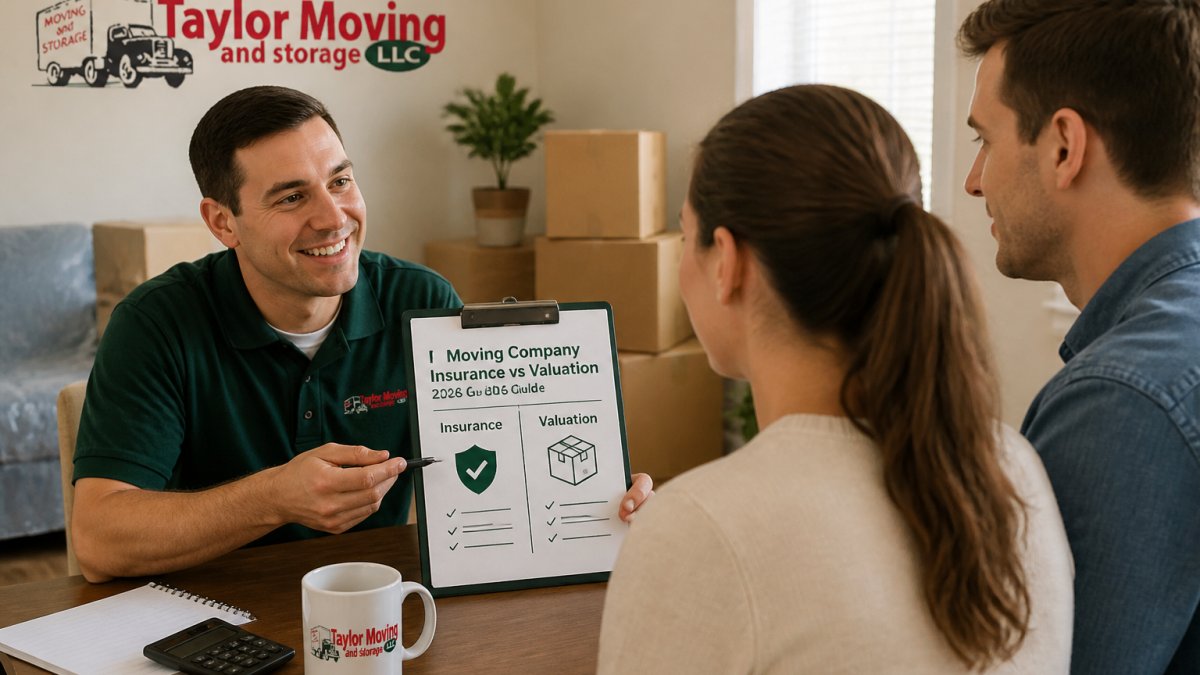
Most people assume their mover's "insurance" covers everything. It usually doesn't. What a moving company offers is valuation coverage, a liability arrangement defined by federal law, not an insurance policy. This guide from Taylor Moving LLC breaks down moving company insurance vs valuation so you know exactly what protects your furniture, boxes, and high-value items before you sign a bill of lading.
The distinction matters because it decides what you get paid when something breaks. Valuation is a contractual limit on the mover's liability. Insurance is a separate policy you buy from a third party. The Federal Motor Carrier Safety Administration's household goods guidance requires interstate movers to disclose your valuation options in writing. Below, we explain both, plus how claims actually work and how to choose.
What Valuation Coverage Is and How It Differs From Third-Party Insurance
Valuation coverage is a mover's written promise to accept liability for your household goods up to a stated dollar amount. It is not a policy, has no premium in the insurance sense, and is governed by the moving contract rather than state insurance regulation. Third-party moving insurance is a separate policy sold by a licensed insurer that may pay beyond the mover's liability.
The practical differences:
- Who backs it: the carrier for valuation; an insurer for a policy.
- What it pays: valuation pays per the contract's formula; insurance pays per the policy terms.
- When it applies: valuation is chosen at booking; insurance is bought separately, often through a broker.
A common mistake is assuming the free option is "insurance." It isn't, and the payout gap can be significant.
Released Value Protection: The Free Per-Pound Liability Option
Released Value Protection is the basic, no-extra-cost option, and it sets the mover's liability at a per-pound rate for the weight of each damaged item. Under the standard formula, a 10-pound lamp reimburses a small amount, not its retail price. That is why a broken flat-screen can return far less than you paid.
The trade-off is simple: you pay nothing extra, and you accept a low ceiling on reimbursement. For a move of low-value, easily replaced items, this can be reasonable. For antiques, electronics, or anything with real replacement cost, it usually isn't.
Full Value Protection: Repair, Replace, or Cash Settlement
Full Value Protection raises the mover's liability so that, for items lost, destroyed, or damaged beyond repair, the carrier must repair, replace, or pay a cash settlement based on current replacement value. It is the stronger valuation tier and typically adds a charge to your bill, calculated from shipment weight and the coverage level you select.
What it covers in practice:
- Items repaired when repair is possible
- Replacement when an item is destroyed
- Cash settlement at replacement value when neither works
Full Value Protection still has limits. High-value items above a stated threshold per pound must be listed separately, and some categories are excluded entirely. Ask for the exclusions in writing before you sign.
Moving Inventory and Item Values: Documenting Before You Sign
A defensible claim starts with a detailed inventory and proof of value. Before moving day, photograph each room, list high-value items with serial numbers, and keep receipts or appraisals for anything expensive. This documentation is what turns a vague complaint into a payable claim.
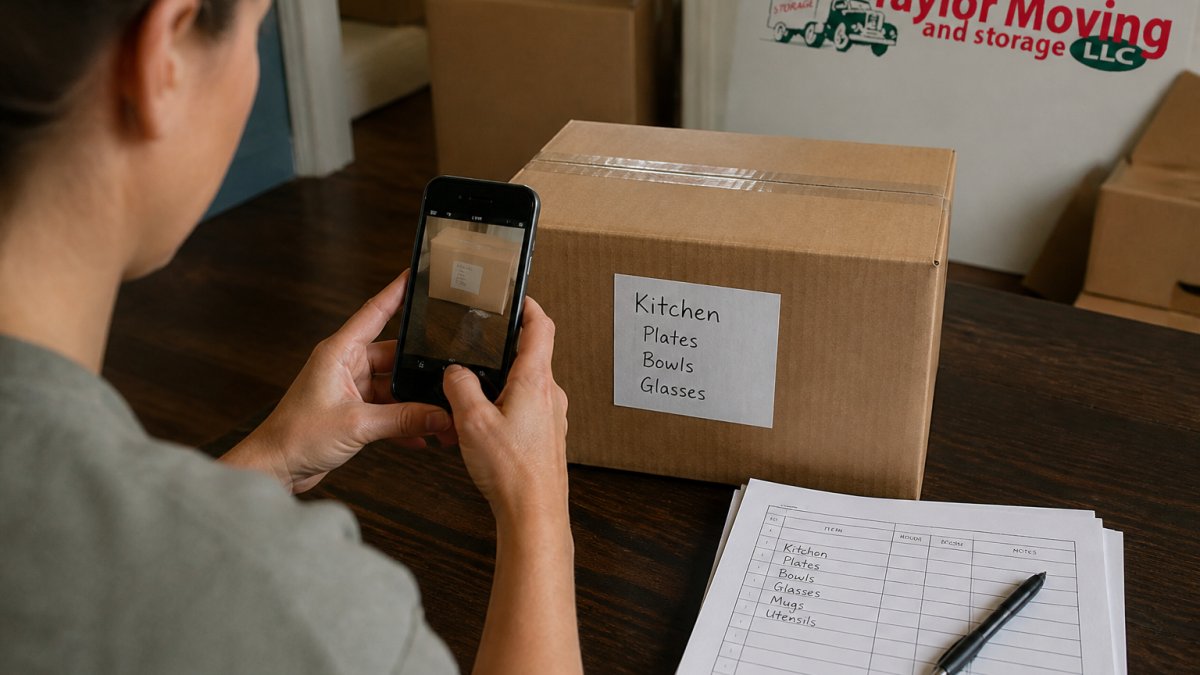
Your inventory should capture:
- Item description and approximate age
- Serial numbers for electronics
- Photographs of condition before loading
- Receipts or appraisals for high-value pieces
Movers are required to prepare a descriptive inventory on interstate shipments. Compare their list against yours at delivery.
How Moving Damage Claims Work: Deadlines, Proof, and Reimbursement
A claim is not a complaint. It is a formal demand under the bill of lading, and it moves on a clock. The single biggest reason claims fail is not that the mover denies them, it is that the customer documents nothing at delivery and files late.
Step 1: Inspect and note damage at delivery. Before the crew leaves, walk the shipment against the descriptive inventory. Open owner-packed boxes you flagged as fragile.
Step 2: Preserve the evidence. Photograph each damaged item in place, then photograph the damage close up. Keep the damaged item and its packaging until the claim is resolved, do not repair, discard, or replace it first, because the carrier has the right to inspect.
Step 3: File in writing, and file early. For interstate shipments, federal rules require the carrier to acknowledge your claim within 30 days of receiving it and to pay, deny, or make a firm settlement offer within 120 days. Those windows run from the date the carrier receives a complete claim, so an incomplete filing restarts the clock.
Step 4: Build the claim file. A complete claim typically includes:
- The bill of lading number and the descriptive inventory
- Photographs of the damage and of pre-move condition
- Receipts, appraisals, or other proof of value
- A written description of each item and the loss claimed
- For Full Value Protection, the replacement cost or repair estimate
Step 5: Track the response and escalate if needed. If the carrier misses its deadlines, denies a valid claim, or makes an offer you believe is wrong, you can file a complaint with the FMCSA's consumer complaint process. Keep a dated log of every call, email, and letter.
One more point that trips people up: valuation and third-party insurance claims are filed in different places. A valuation claim goes to the carrier. An insurance claim goes to the insurer, under the policy's own notice and proof-of-loss deadlines, which may be shorter than the federal ones. If you bought a separate policy, read its claims section before you need it. Discrepancies between the assessed damage and the final payout often require a methodical approach to handling insurance claim estimates to ensure you receive the full coverage you are entitled to.
Coverage Limits, Policy Exclusions, and What Movers Won't Pay For
No valuation option covers everything. Standard exclusions typically include acts of God, pre-existing damage, and items packed by you rather than the crew. High-value items such as jewelry, cash, and documents usually require separate coverage or are excluded outright.
| Exclusion | What It Means | Your Fix |
|---|---|---|
| Owner-packed boxes | No liability for contents you packed | Let the crew pack fragile items |
| Acts of God | Weather and disaster damage excluded | Buy third-party insurance |
| High-value items | Jewelry, cash often excluded | Add separate coverage |
| Pre-existing damage | Wear already present isn't covered | Document condition first |
Read the exclusions before you sign, not after something breaks.
How to Choose the Right Protection for Your Move
Choosing coverage is a math problem, not a loyalty test. Work through it in this order.
1. Estimate the replacement value of your shipment. Add up what it would cost to buy your belongings again at today's prices, not what you paid. If the total is low and the items are easily replaced, Released Value Protection may be adequate.
2. Identify your high-value and fragile items. Most Full Value Protection arrangements require items above a stated value per pound to be listed separately on the inventory, sometimes with a receipt or appraisal, and may charge an additional amount for them.
3. Compare the two valuation tiers against your shipment. Released Value Protection costs nothing extra and caps liability at a per-pound rate.
4. Check what your existing policies already cover. A homeowners or renters policy may extend some coverage to belongings in transit, but the limits are often low, the deductible may exceed the loss, and the policy may exclude moving-related damage entirely.
5. Avoid duplicate recovery. You cannot collect twice for the same loss. If a third-party policy pays, it may seek reimbursement from the carrier, and vice versa. Tell each party what the other has paid, and keep one claim file with copies of everything.
A simple decision path:
- Low-value, easily replaced goods, short haul: Released Value Protection is often enough.
- Electronics, furniture, antiques, or a high total replacement value: Full Value Protection is usually worth the charge.
- Irreplaceable or very high-value items: List them separately and consider a third-party policy on top of valuation.
- You packed it yourself: Expect limited or no coverage for those boxes under either tier.
Whatever mover you hire, confirm they are licensed and insured, and get the coverage terms and exclusions in writing before you sign the bill of lading.
Frequently Asked Questions
What is the difference between moving insurance and valuation?
Valuation is a liability arrangement offered by the moving company itself, while moving insurance is a separate policy from a third-party insurer. Under federal law, interstate movers must provide two valuation options: Released Value Protection at no extra charge, and Full Value Protection for an additional charge. A third-party policy may cover gaps the carrier's liability does not, but it must be purchased separately and often excludes items the mover also excludes.
Is moving company valuation the same as insurance?
No. Valuation sets the dollar amount the carrier is liable for if your household goods are damaged, lost, or destroyed in transit. It is not an insurance policy and does not work like one. The carrier pays based on the option you selected in the bill of lading, not on a policy limit. If you want insurance-style coverage, you would need a separate third-party policy in addition to the mover's valuation.
What is released value protection for a move?
Released Value Protection is the basic, no-extra-cost option required for interstate moves. It sets the carrier's liability at 60 cents per pound, per article. That means a 10-pound item worth $500 would be reimbursed at roughly $6 if damaged. It is the minimum liability level, not replacement value. For high-value or fragile items, this option rarely covers the actual cost to repair or replace.
What does full value protection cover?
Full Value Protection requires the mover to repair, replace, or provide a cash settlement for items that are lost, destroyed, or damaged during the move. You declare a total value for your shipment, and the mover is liable up to that amount, subject to the deductible and exclusions in your contract. Items worth more than $100 per pound often need to be listed separately on a high-value inventory sheet.
How does a moving damage claim work?
Report damage in writing as soon as you notice it, ideally before the crew leaves. Document each item with photographs, keep the original receipts or proof of value, and file the claim using the form and deadline stated in your moving contract. Federal rules require interstate carriers to acknowledge your claim within 30 days and resolve it within 120 days. Keep a copy of everything you send.
Can I buy separate insurance for my belongings during a move?
Yes. Third-party moving insurance is sold by insurers and brokers, not by the carrier. It can supplement the mover's valuation, but read the exclusions carefully: many policies exclude acts of God, fire damage, and items packed by the owner. Before buying, confirm what your renter's or homeowner's policy already covers during a move, since that coverage may overlap.
How do I choose the right valuation coverage?
Start by inventorying your belongings and estimating replacement cost, not what you originally paid. If your shipment includes high-value items, fragile items, or antiques, Full Value Protection usually makes more sense than Released Value. Also check whether the company you hire is licensed and insured, and read the coverage terms in the bill of lading before signing. Ask for a written explanation of the deductible and exclusions.
Sorting out coverage shouldn't feel like reading a legal contract in the dark. Taylor Moving LLC has served the Front Range since 1997 with inclusive hourly pricing, no hidden fees, climate-controlled storage, and experienced local crews matched to your move. Get started with Taylor Moving LLC and move with a plan you actually understand.