 ultimate-guide
Climate Controlled Storage Pricing Guide for 2026
Table of Contents
- Climate Controlled Storage Pricing Guide: What You'll Actually Pay
- Average Monthly Rates and a Quick Comparison Table
- What Drives Climate Controlled Storage Pricing Up or Down
- Climate Controlled Storage Benefits for Sensitive Items
- Long Term Storage Unit Costs vs. Short-Term Rental Rates
- Storage Facility Insurance Requirements and Hidden Fees
- How to Choose the Right Unit and Tour a Facility: A Checklist
- Frequently Asked Questions
Last Updated: September 27, 2026
Climate Controlled Storage Pricing Guide: What You'll Actually Pay
Climate controlled storage pricing varies widely by unit size, location, and facility amenities, but most renters pay a monthly premium over standard units for temperature and humidity regulation. This climate controlled storage pricing guide from Taylor Moving LLC breaks down what drives those rates, which items justify the extra cost, and how to avoid surprise fees.
Average Monthly Rates and a Quick Comparison Table
Because pricing is set facility by facility, the most useful comparison is between the features that drive cost, not a single national figure. The table below maps what typically separates a standard unit from a climate-controlled one.
| Feature | Standard Unit | Climate-Controlled Unit |
|---|---|---|
| Temperature maintenance | None | Regulated year-round |
| Humidity regulation | None | Controlled |
| Best for | Durable goods, tools | Sensitive inventory, furniture |
| Typical premium | Baseline rate | Higher monthly rental rate |
| Insurance requirements | Often required | Often required |
What Drives Climate Controlled Storage Pricing Up or Down
Pricing moves on more than size and location. In practice, six levers do most of the work, and understanding each one lets you predict a rate before you ever call a facility.
Unit Size and Storage Unit Dimensions
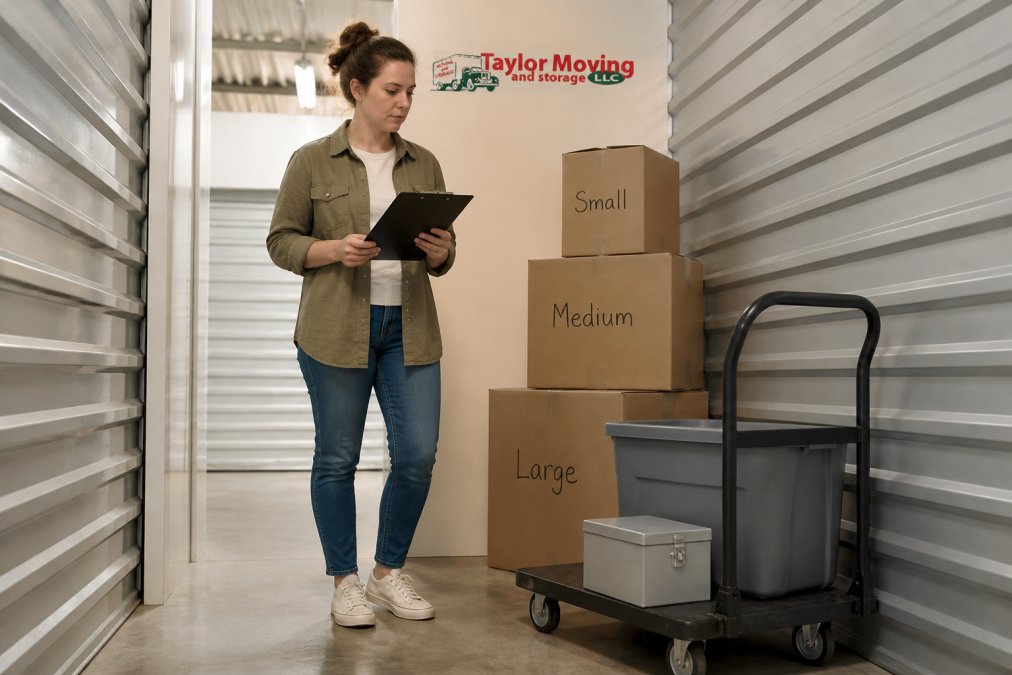
Larger units cost more, but the relationship isn't perfectly linear. A unit that's double the square footage often costs more than double in a climate-controlled building because the entire space must be regulated, not just the portion you use. Storage unit dimensions matter for another reason: you pay for the space you reserve, not the space you fill. Reserve too large and you're paying to condition empty air.
Facility Location and Regional Cost Index
A facility near a dense metro area or along a busy corridor typically charges more than one on the outskirts. The regional cost index reflects local land, labor, and energy costs, and those get passed to your monthly rental rate. Facility location also affects access hours and amenities, which feed back into price.
How the Building Is Regulated: Climate Control vs. Humidity Control
This is the distinction most pricing guides skip, and it's the one that determines whether you're paying for a feature you actually need.
- Temperature-controlled units hold a set temperature range year-round, typically somewhere in the 55°F to 85°F band. They do not actively manage moisture.
- Humidity-controlled units manage moisture, usually targeting a relative humidity range around 30% to 50%, but may not hold a tight temperature band.
- Climate-controlled units do both: they hold temperature and humidity within a target range.
Building Type, Insulation, and Energy Load
A purpose-built climate-controlled building with modern insulation and a sealed envelope costs less to run than a retrofitted warehouse with a unit-by-unit system. That efficiency gap shows up in your rate. Interior units that share walls with other conditioned units hold temperature more easily than units on an exterior wall or near a roll-up door, and some facilities price accordingly.
Unit Position and Accessibility
Ground-floor and drive-up units often carry a convenience premium. Upper-floor units reached by elevator or stairs are frequently the cheapest in the building. If you can trade a short walk for a lower rate, that's usually the easiest discount to capture.
Demand, Season, and Occupancy
Rates rise when local occupancy is tight and soften when a facility is running below target. Late spring through early fall is peak moving season in most markets, and promotional pricing is most common in the slower winter months. If your timeline is flexible, asking what the rate looks like if you move in a month later is a legitimate question that sometimes produces a better number.
Climate Controlled Storage Benefits for Sensitive Items
The core climate controlled storage benefit is protection for items that degrade in uncontrolled environments. Wood furniture can warp and crack when humidity swings. Electronics and instruments suffer from condensation. Documents, photos, and artwork fade or wrinkle. Upholstery can grow mildew in damp heat.
Temperature-sensitive items that usually justify the premium include:
- Solid wood and antique furniture
- Musical instruments
- Electronics and appliances
- Leather goods and upholstered pieces
- Photographs, documents, and artwork
- Mattresses and fabric items stored long term
Long Term Storage Unit Costs vs. Short-Term Rental Rates
Long term storage unit costs and short-term rental rates follow different logic. Short-term renters often pay a higher effective monthly rate because facilities build in turnover costs, and move-in specials may only apply to the first month. Long-term renters can sometimes negotiate a lower recurring rate, but they also absorb every annual increase.
Storage Facility Insurance Requirements and Hidden Fees
Storage facility insurance requirements are frequently misunderstood. Most facilities require you to carry some form of coverage, either through your renter's or homeowner's policy or a plan the facility offers. This is a protection requirement, not a hidden charge, but it does add to your true monthly cost.
How Coverage Usually Works
There are three common paths, and they are not equivalent:
- Your existing renter's or homeowner's policy. Off-premises personal property coverage often extends to a storage unit, but the limit is frequently a percentage of your contents coverage rather than the full amount. Call your insurer and confirm the off-premises limit and your deductible before you assume you're covered.
- A facility-offered protection plan. These are typically tiered by coverage amount, with the monthly charge rising as the coverage limit rises. They are usually not insurance policies in the traditional sense, and they may exclude certain categories such as jewelry, collectibles, or items in non-standard packaging.
- A standalone storage policy. Available from several insurers, these are written specifically for stored goods and often include the broadest coverage, at a higher monthly cost.
Fees to Ask About Before You Sign
- Administrative or setup fee charged at move-in
- A security deposit, sometimes refundable and sometimes applied to the final month
- Pro-rated rent for partial months, and whether the facility rounds up to a full month
- A required lock purchase if you don't bring your own
- Late fees and lock-cut charges
- A rate increase schedule, and how much notice the facility gives before raising rent
- Climate regulation surcharges in some buildings
- Early-termination or minimum-stay terms
The Billing Cycle Trap
Most storage rent is due on the same day each month, and many facilities bill on a calendar-month cycle rather than a 30-day cycle. If you move in on the 20th, you may owe a pro-rated amount for the remainder of that month plus a full month on the 1st, which can feel like a double payment in your first few weeks.
Calculating Your True Monthly Cost
Add these four numbers together before comparing facilities:
- Steady-state monthly rent (not the introductory rate)
- Monthly protection plan or insurance cost
- Any recurring surcharges
- The amortized cost of one-time fees, spread across the months you expect to store
When you hire anyone to move or store your belongings, make sure the company you hire is licensed and insured. That single check protects you if something goes wrong.
How to Choose the Right Unit and Tour a Facility: A Checklist
Choosing well comes down to matching size, features, and terms to your real needs. Use this checklist on your facility tour:
- Confirm the unit's exact storage unit dimensions
- Verify temperature maintenance and humidity regulation are active
- Ask the steady-state monthly rental rate, not just the intro rate
- Get all administrative fees and deposits in writing
- Confirm insurance requirements and accepted coverage
- Check access hours against your schedule
- Inspect facility amenities: lighting, security, pest control
- Look for signs of storage unit maintenance issues
- Confirm the storage contract terms and cancellation policy
Frequently Asked Questions
How much is climate controlled storage per month?
Monthly rates depend on unit size, facility location, and demand in your area. A small 5x5 unit typically costs less than a large 10x20, and prices shift with the regional cost index and seasonal availability. Because rates vary so much by market, the most reliable approach is to request current quotes from a local facility and compare the total monthly rental rate, not just the advertised move-in special.
Is climate controlled storage worth the extra expense?
It depends on what you're storing. Electronics, wood furniture, leather, photographs, musical instruments, and antiques can warp, crack, or corrode in uncontrolled heat and humidity. If your belongings fall into those categories and you're storing them for more than a month or two, the climate controlled storage benefits usually outweigh the added cost. For basic items like plastic bins of clothing, a standard unit may be fine.
What factors influence the monthly cost of climate controlled storage?
The biggest factors are unit size and storage unit dimensions, facility location and regional cost index, unit availability, and whether you sign a long-term or short-term rental agreement. Facility amenities like 24-hour access, security cameras, and on-site staff also affect price. Administrative fees, security deposits, and insurance requirements can add to your total, so ask for a full written breakdown before you sign.
Are there hidden fees with climate controlled storage rentals?
Some facilities charge administrative fees, security deposits, or require you to carry insurance, which may be an added monthly cost. Others charge late fees or raise rates after a promotional period ends. Before signing a rental agreement, ask for the total move-in cost and the ongoing monthly rate in writing. A transparent facility will walk you through every line item so there are no surprises.
How do I determine the right size unit for my storage needs?
Start by listing your largest items, like sofas, mattresses, and appliances, then estimate the boxes and smaller items. A 5x5 unit fits a dorm room's worth of belongings, a 10x10 handles a one-bedroom apartment, and a 10x20 holds a two-to-three-bedroom home. Ask the facility for a size guide or walk through a display unit during your tour to confirm the fit.
Do I need insurance for a climate controlled storage unit?
Most storage facilities require some form of coverage, either through your renter's or homeowner's policy or a plan offered by the facility. Storage facility insurance requirements vary, so check your existing policy first to see if off-site belongings are covered. If not, ask the facility what protection plans they offer and what they cover before you move your items in.