 ultimate-guide
How to Find Reliable Movers: 2026 Vetting Guide
Table of Contents
- Why Finding Reliable Movers Starts With Verification
- The Moving Company Vetting Checklist: 7 Steps Before You Book
- How to Verify Moving Company Insurance Before You Sign
- Questions to Ask Professional Movers Before Booking
- Red Flags: How to Spot a Moving Scam Before It Costs You
- Understanding Moving Quotes, Estimates, and Hidden Fees
- How to Find Reliable Movers Using Digital Footprint Verification
- What to Do If Something Goes Wrong: Dispute Resolution After Your Move
- Frequently Asked Questions
Last Updated: October 4, 2026
Why Finding Reliable Movers Starts With Verification
Learning how to find reliable movers begins with one habit: verify before you book.
A moving broker is a company that arranges your move but hires another carrier to perform it.
Federal rules require interstate carriers to register with the Federal Motor Carrier Safety Administration, which maintains public databases anyone can search.
The seven steps below cover licensing, insurance, quotes, and the red flags that separate professionals from predators.
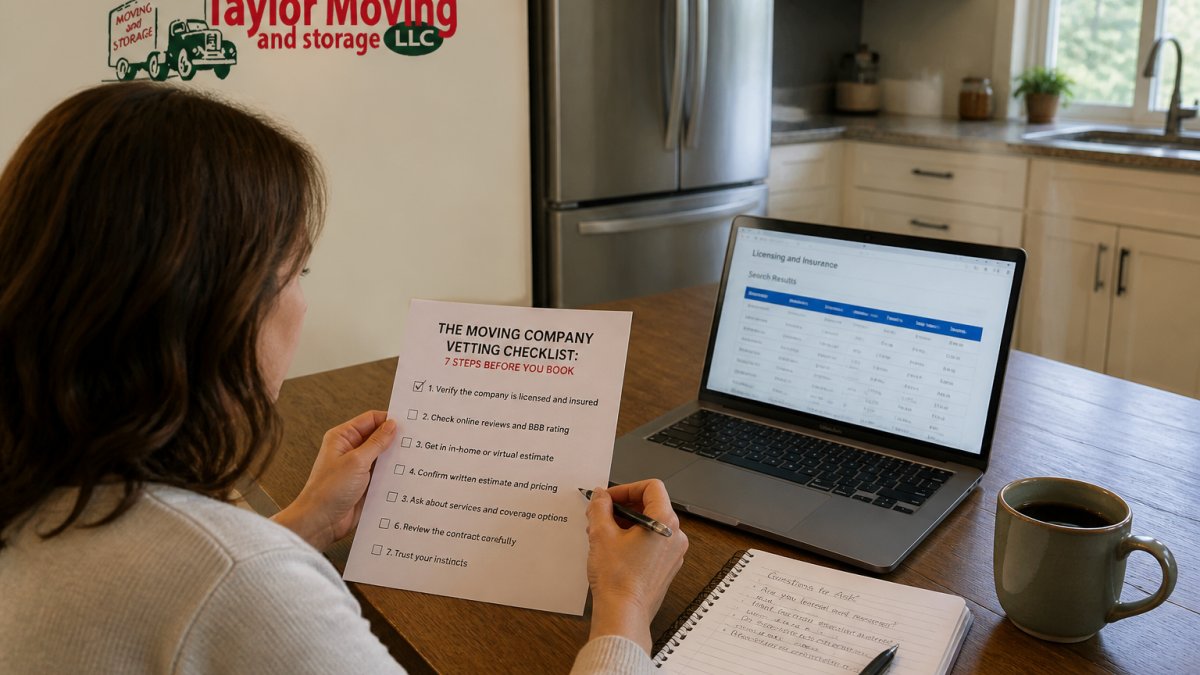
The Moving Company Vetting Checklist: 7 Steps Before You Book
Run every candidate through the same seven checks before you sign anything. This sequence matters: licensing first, then safety history, then insurance, then quotes.
Step 1: Confirm Licensing and Operating Authority
Ask for the company's US DOT number and Motor Carrier number, then look both up yourself. Interstate moves require federal operating authority; intrastate moves fall under state rules. A legitimate company shares these numbers without hesitation.
Step 2: Check Safety Records and Complaint History
The FMCSA's safety database shows crash history, out-of-service rates, and complaint patterns. Read the record the way an auditor would: patterns matter more than single incidents.
Step 3: Verify Insurance and Valuation Coverage
Ask for a certificate of insurance and confirm the policy is active. Note the difference between valuation coverage, which reimburses based on the declared value of your goods, and liability insurance, which covers the carrier's legal responsibility. They are not the same thing.
How to Verify Moving Company Insurance Before You Sign
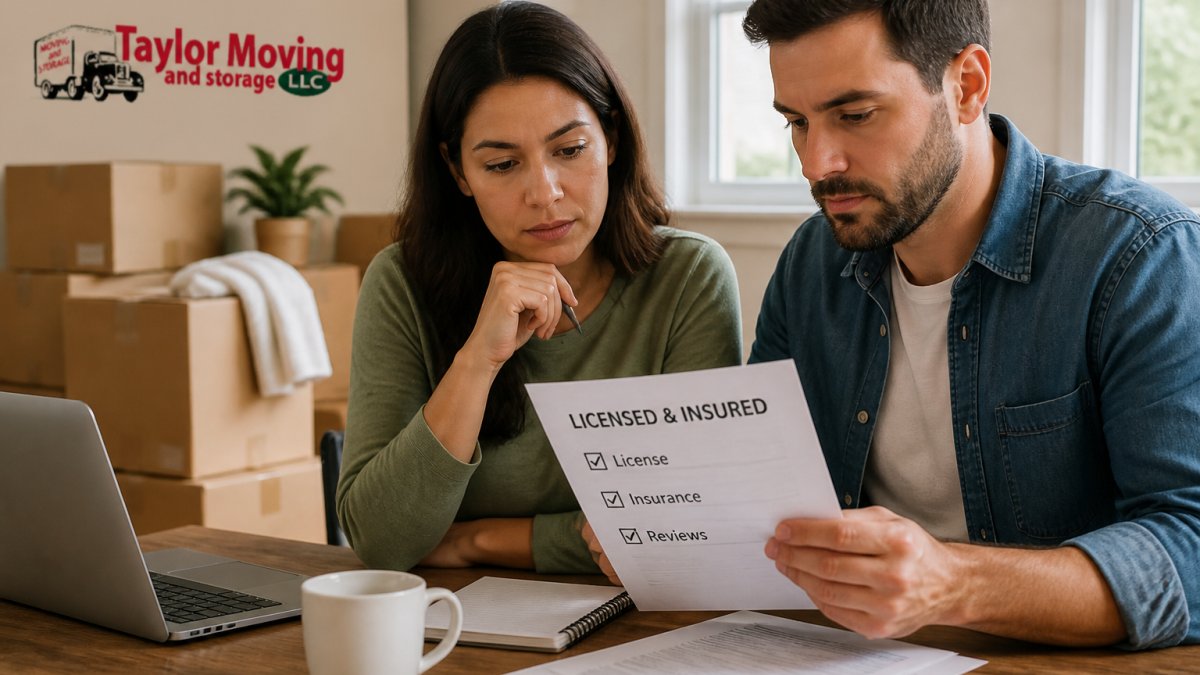
Verification means seeing the paperwork, not hearing a verbal promise. Request a certificate of insurance directly from the company's insurer or agent, then call the number on the certificate to confirm the policy is current.
For interstate moves, federal rules require carriers to carry a minimum level of liability coverage, and the FMCSA's consumer protection rules spell out what carriers must disclose to you in writing. Ask three questions:
- What is your USDOT number, and what does your policy cover?
- Is this full replacement value or released value?
- Who do I contact to file a claim, and what is the deadline?
Questions to Ask Professional Movers Before Booking
The questions you ask professional movers reveal more than the answers themselves. Vague responses to specific questions are a signal. What follows is a set of questions with the answer you should expect, and the answer that should make you keep looking.
Licensing and Insurance
- "What is your US DOT number and Motor Carrier number?" Expect both, offered without hesitation. A company that has to look them up, or that gives a number that doesn't match its legal name, is a problem.
- "Can you send a certificate of insurance directly from your insurer?" Expect a certificate you can verify by calling the number on it. A photocopy or a verbal assurance is not proof.
- "Are you licensed for moves within my state, or only federally?" Expect a clear answer. Federal registration alone does not cover moves that stay inside a single state, and many homeowners never think to ask.
Estimates and Pricing
- "Will you perform an in-home survey before quoting?" Expect yes. A quote given only over the phone, with no walkthrough, is the most common setup for a bait-and-switch.
- "Is this a binding, non-binding, or binding not-to-exceed estimate?" Expect the type stated in writing. If the company can't name the type, the quote is not a quote.
- "What is your full fee schedule, including stair, long carry, and shuttle fees?" Expect an itemized list. A company that can't produce one is telling you where the surprise charges will come from.
Crew and Logistics
- "Will you provide a written inventory list before loading?" Expect yes. The inventory list is what you will use to check off items on delivery day.
- "Are the crew members your employees or subcontractors?" Expect a direct answer. Subcontracting is not automatically bad, but you deserve to know who is in your home.
- "Will the same crew that loads my belongings also unload them?" Expect a clear answer. If the answer is no, ask how the inventory is transferred and who is accountable for damage in transit.
How to Read the Answers
A company that answers all of these in writing is worth a second conversation. A company that dodges even two is not. The pattern matters more than any single answer: reliable movers treat these questions as routine, because they answer them every day. Unreliable movers treat them as friction, because each answer creates a record they would rather not have.
Red Flags: How to Spot a Moving Scam Before It Costs You
A moving scam usually follows a recognizable pattern: a lowball phone quote, a demand for a large deposit upfront, and a demand for more cash on delivery day before the truck is unloaded. The bait and switch is its close cousin: the quoted price changes once your belongings are on the truck and you have no use.
Watch for these signals:
- No US DOT or Motor Carrier number, or a number that doesn't match the company name
- Quotes given only over the phone, with no in-home survey
- A demand for a large cash deposit before any paperwork
Understanding Moving Quotes, Estimates, and Hidden Fees
A binding estimate locks in the price regardless of actual weight or hours, as long as the inventory and services you described don't change. A non-binding estimate is an educated guess that can rise, sometimes sharply, once the truck is loaded and the actual weight is known.
Federal rules require carriers to give you a written estimate and to make the document available before you commit. If a company won't put the estimate type in writing, treat that as a disqualifier.
The Hidden Fee Checklist Unreliable Movers Rely On
The bait-and-switch rarely happens on the headline price. It happens in the line items that appear after your belongings are on the truck. Ask any candidate to quote each of the following in writing, and compare the answers side by side:
| Fee Type | What It Covers | How to Verify It Upfront |
|---|---|---|
| Stair or elevator carry | Access difficulty at either address | Disclose every flight of stairs and whether an elevator is available, then confirm the per-flight charge in writing |
| Long carry | Distance the crew must move items from the truck to the door | Measure the actual carry distance at both addresses and ask for the threshold that triggers the fee |
| Shuttle fee | A smaller truck used when a full-size truck can't reach your door | Ask whether a shuttle is likely at either address and what it would add |
| Packing materials | Boxes, tape, padding, wardrobe cartons | Request an itemized materials list with unit counts, not a lump sum |
| Fuel or peak-season surcharge | Seasonal demand or fuel cost adjustments | Ask for the surcharge policy in writing and whether it is capped |
| Bulky item charge | Oversized items like pianos, safes, or large appliances | List every bulky item before the survey so it is priced in advance |
| Re-weigh or re-measure fee | A second weighing or measurement after loading | Confirm whether the estimate is based on a certified scale weight and who pays for a re-weigh |
How to Compare Quotes Without Getting Played
Comparing quotes is not about finding the lowest number. It is about normalizing the inputs so the numbers mean the same thing.
- Give every company the same inventory list, the same access details, and the same requested services. If one company quotes a smaller move than you described, the quote is not comparable.
- Ask each company to state the estimate type in writing: binding, non-binding, or binding not-to-exceed.
- Ask whether the crew is employees or subcontractors, and whether the same crew that loads will unload.
What the Bill of Lading Must Show
The bill of lading is the contract for your move. Before you sign, confirm it lists the estimate type, the agreed price or rate, the pickup and delivery addresses, the inventory, and the claim filing deadline. Ask for a copy to keep. A carrier that won't let you read it before signing is a carrier you should walk away from.
How to Find Reliable Movers Using Digital Footprint Verification
Digital footprint verification means checking a company's online presence the way an investigator would: cross-referencing its website, business registration, reviews, and social accounts for consistency.
Check the address on the website against the address on the business registration. Compare the company name across review platforms.
For local moves, confirm the company is licensed for intrastate work in your state, since federal registration alone doesn't cover moves within a single state.
What to Do If Something Goes Wrong: Dispute Resolution After Your Move
Start with the carrier's internal claims process, which federal rules require them to describe in writing.
If the carrier won't resolve it, interstate disputes can go to the FMCSA's dispute resolution process, which includes an arbitration program for certain claims.
Moving is stressful enough without wondering whether the company you hired will actually show up, treat your belongings with care, or honor the quote you agreed to.
Frequently Asked Questions
What are the biggest red flags when hiring movers?
Demanding a large cash deposit upfront, refusing to provide a written estimate, quoting a price without seeing your inventory, and lacking a US DOT or Motor Carrier number are all major red flags. Other warning signs include no physical address, high-pressure sales tactics, and requests for payment before loading begins. If a company cannot produce proof of licensing and insurance, walk away.
How do I verify if a moving company is properly licensed and insured?
Ask for their US DOT number and Motor Carrier number, then look them up in the FMCSA database to confirm operating authority and safety record. For insurance, request a Certificate of Insurance showing liability coverage and ask about valuation coverage options. A legitimate carrier will provide these documents without hesitation. If they dodge the question, that is your answer.
What questions should I ask before hiring a moving company?
Ask whether they are a carrier or a broker, how they handle binding versus non-binding estimates, what valuation coverage is included, and whether they use full-time employees or day labor. Also ask about their process for handling damage claims and how they communicate during the move. A reliable mover will answer all of these clearly and in writing.
How much do movers typically cost?
Pricing depends on the volume of household goods, the distance involved, access at both locations, and whether packing services are included. Hourly rates for local moves vary by crew size and truck requirements. Request an in-home survey and a written estimate from at least three companies so you can compare line items, not just totals. Be wary of any quote that seems significantly lower than the rest.
How can I check a moving company's reputation beyond online reviews?
Check the FMCSA safety record and complaint history, search the Better Business Bureau for accreditation status and unresolved complaints, and look at the company's digital footprint. Verify that their address appears on Google Maps, that their website domain has a history, and that reviews appear across multiple platforms. A company with a real local presence will have consistent information everywhere.
What should I do if my movers damage my belongings?
Document the damage with photos before the crew leaves, note it on the bill of lading, and file a claim in writing with the carrier within the timeframe stated in your service agreement. If valuation coverage was purchased, the carrier is responsible up to that amount. If the company is unresponsive, you can file a complaint with the FMCSA or pursue the carrier's arbitration program.